Spunbond Non-woven Fabric Manufacturer in Madurai, India
Engineered Spunbond Non‑woven Fabrics.
Thusmaa SMS Non-wovens Private Limited is a Madurai-based manufacturer specialising in Spunbond non-woven fabric for industrial and commercial material requirements.
Dedicated Spunbond Non-woven Fabric Manufacturing
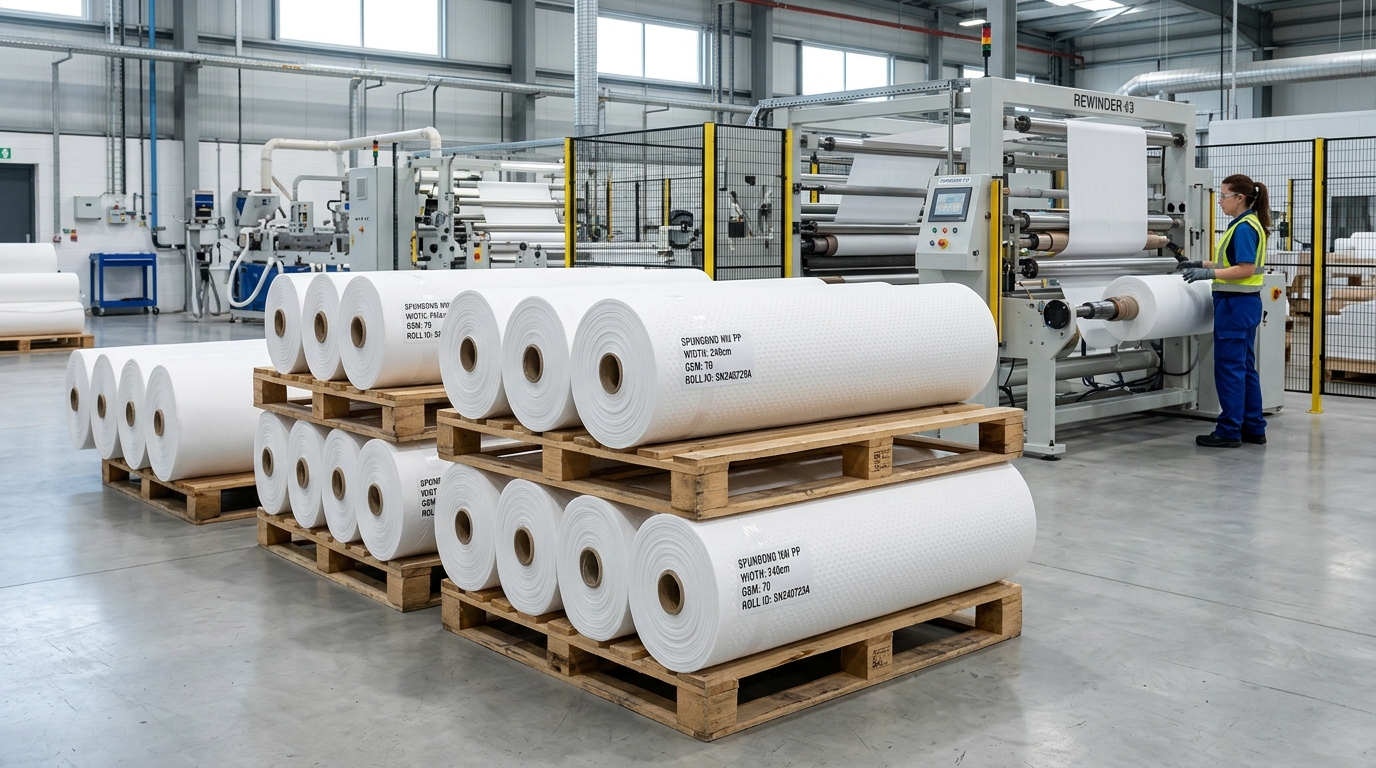
Thusmaa SMS Non-wovens Private Limited is structured around one core industrial mission: the precision extrusion and roll converting of high-performance Spunbond non-woven fabrics.
Operating from our manufacturing facility in Madurai, Tamil Nadu, India, we engineer technical rolls for downstream converters serving healthcare supplies, consumer hygiene, protective workwear, and filtration industries across South India.
Understanding Spunbond Non-woven Fabric
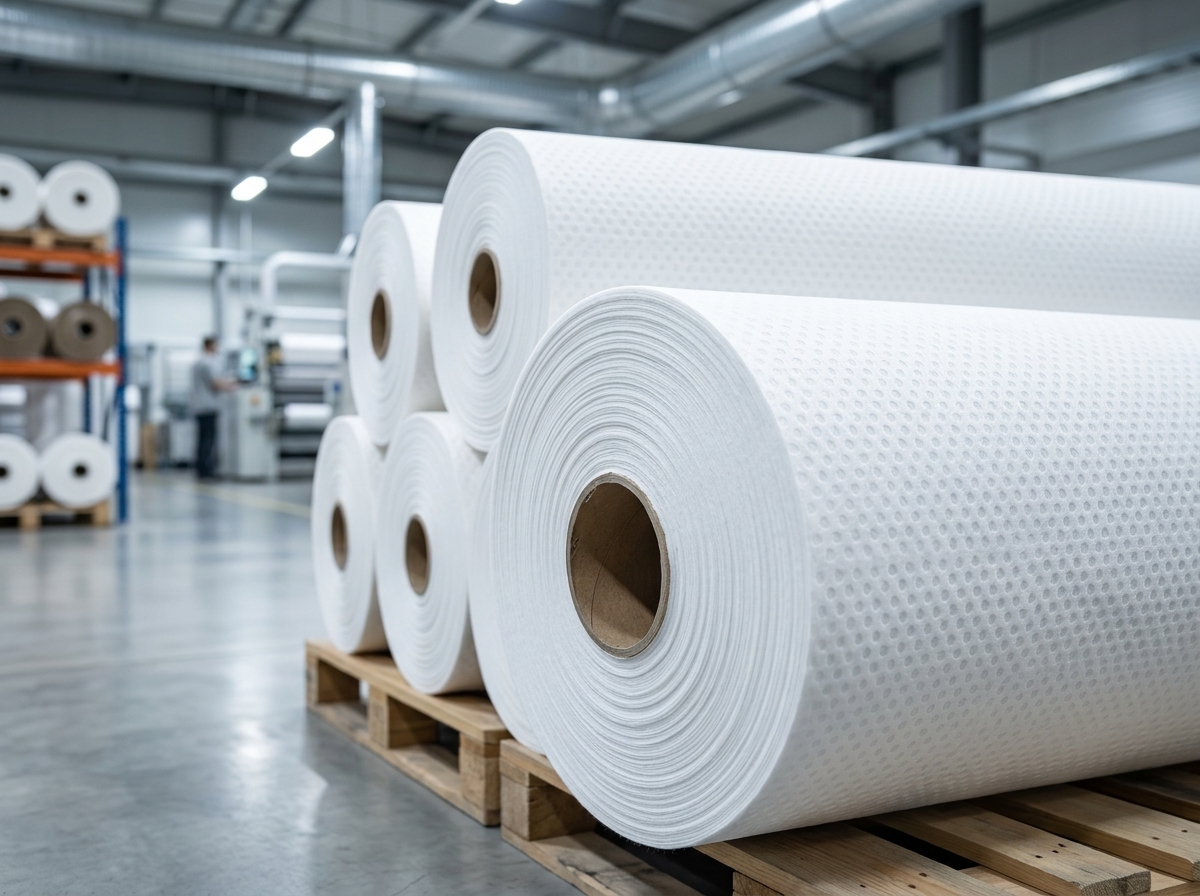
Spunbond non-woven fabric is an engineered continuous filament textile delivering high tensile strength, breathability, and uniform web formation.
Continuous Filament & Thermal Bonding Structure
Click individual stages to examine how polymer extrusion, web formation, and calender bonding build Spunbond fabric performance.
Continuous Polymer Filaments
15 – 25 Microns (1.5 – 2.5 Denier)Multi-Directional Random Web Formation
Isotropic Web MatrixThermal Point-Bond Calendering
Diamond / Sesame / Oval EmbossEngineered Spunbond Web Synthesis
Spunbond non-woven fabric is synthesized by extruding virgin polypropylene polymer into continuous filaments, aerodynamically orienting them into a multi-directional isotropic web, and thermally fusing them with patterned calender rolls for superior tensile strength, breathability, and converter runnability.
Verified Spunbond Fabric Application Categories
Spunbond non-woven fabrics are engineered for converters producing technical, medical, hygiene, and protective products.
Packaging & Bags
W-cut, D-cut shopping bags, BOPP laminated packaging, and 25kg commodity sacks with high burst strength.
Agriculture & Crop Covers
UV-stabilized crop fleece (17–30 GSM), banana bunch covers, insect barriers, and thermal frost protection.
Mattress & Upholstery
Acoustic pocket spring sleeves (60–90 GSM), mattress bottom scrim, quilt backing, and dust covers.
Medical & Healthcare
Disposable surgical caps, examination gowns, hospital bedsheets, pillow covers, and mask outer layers.
Hygiene Component Uses
Diaper topsheet fabrics, waistband liners, feminine hygiene outer layers, and soft-touch adult incontinence sheets.
Protective Apparel
Disposable laboratory coats, cleanroom visitors' wear, protective overalls, and aprons offering dust containment.
Industrial & Filtration
Air and liquid filter composite substrates, automotive cabin air filters, and technical acoustic absorption layers.
Custom Converter Specs
Tailored basis weights (10–150 GSM), custom slit widths (50–3,200mm), hydrophilic/UV treatments, and custom color batches.
Serving B2B Converters Across South India
Manufactured at our Madurai facility and dispatched directly to industrial buyers across all five South Indian states.
Home to Thusmaa's primary manufacturing facility in Madurai, with rapid freight connectivity across central, western, and northern industrial corridors of Tamil Nadu.
Dedicated B2B supply lines connecting Thusmaa's Madurai plant to Karnataka's biotechnology, precision engineering, and garment conversion hubs.
Direct logistics channels bridging Madurai through the Palakkad and Kollam mountain corridors to Kerala's hospital supply, personal hygiene, and protective apparel converters.
Bulk Spunbond fabric roll supply dispatched from Madurai to industrial manufacturing clusters, pharmaceutical corridors, and coastal ports across Andhra Pradesh.
Direct B2B supply lines from our Madurai Spunbond extrusion facility to Hyderabad's genome valley pharmaceutical hubs, bulk converters, and industrial fabrication belts.
Technical & Procurement FAQs
Precise, verified answers to common technical queries from B2B fabric converters.
What is Spunbond non-woven fabric?
Spunbond non-woven fabric is an engineered synthetic textile manufactured directly from 100% virgin polypropylene (PP) homopolymer. Molten polymer is extruded through precision spinnerets into continuous filaments, aerodynamically drawn and laid onto a vacuum conveyor into a uniform random web, and thermally bonded using heated embossing calender rollers. The continuous filament structure delivers superior tensile strength, tear resistance, breathability, and lint-free durability without chemical binders.
How is Spunbond non-woven fabric manufactured?
Spunbond manufacturing is a continuous in-line extrusion process consisting of five stages: 1) Polymer melting and gravimetric dosing; 2) Filament extrusion through high-precision multi-hole spinneret dies; 3) High-velocity aerodynamic cooling and drawing that molecularly aligns polymer chains for maximum tensile modulus; 4) Isotropic randomized filament web deposition on a vacuum conveyor belt; and 5) Thermal point calendering with engraved embossing rollers (diamond, sesame, or oval) that melt-bond filament intersections.
Where is Thusmaa SMS Non-wovens Private Limited located?
Thusmaa SMS Non-wovens Private Limited is located in Madurai, Tamil Nadu, India. The company operates its dedicated Spunbond non-woven fabric extrusion and roll converting plant in Madurai, serving industrial converters across South India and domestic markets.
Who manufactures Spunbond non-woven fabric in Madurai?
Thusmaa SMS Non-wovens Private Limited is a specialized B2B manufacturer of Spunbond non-woven fabrics based in Madurai, Tamil Nadu, India, supplying technical fabric rolls for medical, hygiene, packaging, agriculture, and industrial converters.
What are the key advantages of Spunbond polypropylene fabric?
Key advantages include: 1) High tensile and tear resistance in both Machine Direction (MD) and Cross Direction (CD); 2) 100% recyclable virgin polypropylene base; 3) Excellent air permeability and breathability; 4) Non-toxic, hypoallergenic, and lint-free surface; 5) Thermal point bonding eliminating chemical adhesives; 6) Dimensional stability during high-speed converter unwinding; and 7) Adaptability to custom topical treatments such as hydrophilic, hydrophobic, UV resistance, and anti-static finishes.
What is the difference between Single Beam (S) and Multi-Beam (SS / SSS) Spunbond fabric?
Single Beam (S) Spunbond uses one spinneret beam to lay down continuous filaments, making it economical for protective covers, packaging, and agriculture. Multi-Beam (SS and SSS) lines deposit two or three consecutive filament streams before the calender roller, resulting in significantly finer fiber distribution, higher opacity, enhanced softness, tighter pore uniformity, and higher tensile strength at lower basis weights.
Looking for a Spunbond Non-woven Fabric Manufacturing Partner?
Connect directly with our Madurai production desk to discuss bulk roll specifications, MOQ requirements, and dispatch schedules across South India.